Electronic Tendering: The Complete Guide for 2026

Electronic tendering is the fully digital process of soliciting, evaluating, and awarding procurement contracts through secure online platforms, replacing paper-based tender workflows end to end. Where traditional tendering meant couriering thick bid packages and manually tracking submissions, e-tendering covers everything from publishing a Request for Proposals (RFP) to digital contract signing within a single system. The process handles formal procurement instruments including RFQs, RFPs, and Invitations to Tender (ITTs), and it applies equally to public sector agencies, construction buyers, and private enterprises sourcing goods or services.
The core advantages are concrete: cost savings from eliminating paper and manual processing, faster evaluation cycles, and a transparent audit trail that satisfies compliance requirements. Government agencies at every level, from federal departments to municipal buyers, now rely on digital bidding processes to reach more suppliers and document every decision. For procurement professionals and business decision-makers, understanding how these systems work, and where they can fail, is the difference between a smooth implementation and a costly rollout.
Key use cases include:
- Public sector procurement at federal, state, and municipal levels
- Construction and infrastructure projects requiring multi-stage tender evaluation
- Goods and services sourcing for recurring or high-value contracts
- Subcontractor selection within larger prime contractor workflows
Table of Contents
- What makes up an electronic tendering system?
- How does the electronic tendering process work, step by step?
- What are the real advantages and disadvantages of e-tendering?
- What methods and approaches work best in electronic tendering?
- What skills and innovations are shaping e-tendering success?
- How do you implement electronic tendering in the US procurement market?
- Electronic tendering in US procurement: real-world examples
- Protenders gives you a faster path to government tender opportunities
- FAQ
- Key takeaways
What makes up an electronic tendering system?
The technology behind a well-built e-tendering platform is more layered than most buyers realize when they first sign up. Electronic tendering systems consist of tender portals, electronic document repositories, digital signatures, encrypted communications, and centralized databases for supplier and tender data. Each component plays a distinct role, and a weakness in any one of them creates compliance or security gaps.
Core components include:
- Tender publishing portals: Buyers post solicitations, attach specifications, and set submission deadlines in a publicly accessible or invite-only environment.
- Electronic bid submission modules: Suppliers upload proposals, pricing schedules, and compliance documents through structured forms that enforce completeness before submission.
- Document repositories: All versions of tender documents, addenda, and submitted bids are stored with timestamps, creating a defensible record for audits.
- Digital signatures and encryption: Bids are sealed cryptographically until the opening date, preventing premature access and ensuring authenticity.
- Audit trails: Every action, from a buyer downloading a document to a supplier submitting a clarification, is logged with user identity and timestamp.
- Messaging and clarification tools: Buyers and suppliers communicate within the platform, keeping all correspondence on record and visible to evaluators.
- Supplier databases: Centralized vendor profiles store registration details, certifications, and past performance data that feed into prequalification screening.
Integration with wider procurement and contract management systems matters too. A platform that cannot pass awarded contract data into an ERP or financial system forces manual re-entry, which defeats much of the efficiency gain. The RICS E-Tendering Black Book, a widely cited construction industry standard, notes that workflow standardization before implementation is as critical as the technology itself.
How does the electronic tendering process work, step by step?
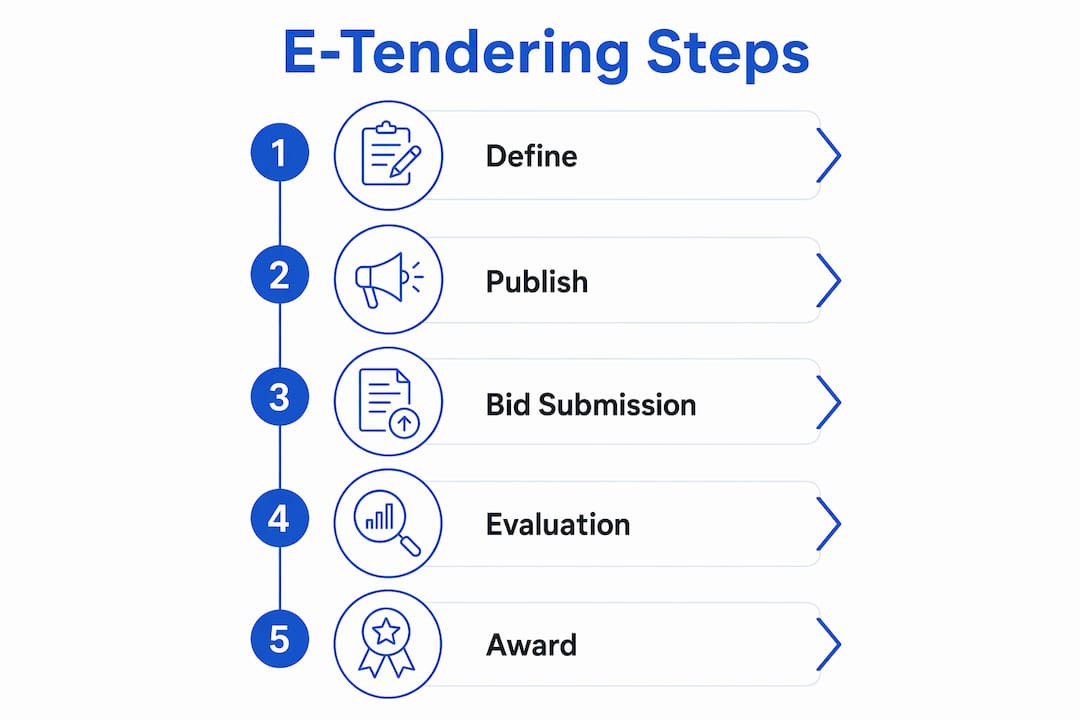
The process follows a defined sequence, and skipping steps creates legal and operational risk. Here is how a complete cycle runs:
- Define requirements. The buying organization specifies what it needs: scope of work, technical standards, delivery timelines, and evaluation criteria. This document becomes the foundation of the entire tender.
- Publish the tender. The buyer uploads the solicitation to the e-tendering platform, sets the submission deadline, and notifies registered suppliers. For government buyers, this step often triggers a mandatory publication window.
- Supplier outreach and registration. Interested suppliers register on the platform, download tender documents, and acknowledge receipt. Some platforms require a formal expression of interest before document access is granted.
- Clarification period. Suppliers submit questions through the platform's messaging module. Buyers respond to all suppliers simultaneously, and every Q&A exchange is logged and published to maintain equal treatment.
- Bid submission. Suppliers upload completed proposals before the deadline. The system timestamps each submission and locks bids cryptographically until the official opening time.
- Bid opening and evaluation. At the designated time, evaluators access submissions. Automated scoring tools can rank bids against weighted criteria, though human review remains standard for complex contracts.
- Negotiation or best-and-final-offer stage. For two-stage tenders or high-value contracts, the buyer may invite shortlisted suppliers to refine pricing or terms within the platform before a final decision.
- Contract award announcement. The winning supplier receives formal notification through the platform. Unsuccessful bidders typically receive a debriefing notice, which the audit trail supports.
- Electronic contract signing. Both parties execute the agreement using digital signatures, making the contract legally binding without physical documents.
- Post-award documentation. Signed contracts, performance milestones, and compliance records are stored in the repository for the contract's duration, supporting ongoing management and future audits.
The e-tendering process typically includes defining requirements, publishing on e-platforms, supplier outreach, bid submission, digital evaluation, negotiation, and contract awarding. Each step generates a data point that feeds into the audit trail, which is why skipping even a minor stage can create gaps that regulators or auditors will flag.
What are the real advantages and disadvantages of e-tendering?

The advantages of electronic tendering include efficiency, transparency, cost reduction, and enhanced supplier competition. The disadvantages include technical risks, a learning curve, and limits on pricing flexibility. Neither side of that ledger is trivial, and procurement teams that go in expecting a frictionless upgrade tend to hit the hardest walls.
Advantages:- Efficiency gains: Automated workflows eliminate manual sorting, physical delivery, and paper-based tracking. Evaluation cycles that once took weeks can compress significantly.
- Transparency and audit readiness: Every action is logged. For public sector buyers, this directly supports accountability requirements under procurement regulations.
- Cost reduction: Eliminating printing, courier fees, and physical storage cuts direct costs. Wider supplier participation also tends to produce more competitive pricing.
- Supplier competition: Digital platforms lower the barrier for smaller suppliers to participate, broadening the competitive pool beyond established vendors.
- Fewer post-contract disputes: Structured submission formats mean both parties work from the same documented requirements, reducing ambiguity at contract execution.
- Learning curve: Procurement staff and suppliers both need training. Organizations that underinvest in onboarding see adoption rates suffer.
- System outages: A platform going down near a submission deadline creates legal and operational headaches. Buyers need contingency protocols in place.
- Limits on supplier differentiation: Standard form submissions can prevent suppliers from communicating nuanced value propositions. Word limits and structured fields favor compliance over creativity.
- Pricing innovation constraints: Non-standard pricing models, such as usage-based billing or outcome-linked fees, often cannot be captured in fixed tender forms.
- Cybersecurity risks: Centralized bid data is a target. Platforms without strong encryption and access controls expose sensitive commercial information.
What methods and approaches work best in electronic tendering?
E-tendering methods commonly include single-stage and two-stage tenders, open and selective tenders, and may employ bidding auctions or reverse auctions. The right method depends on contract complexity, the supplier market, and how much negotiation the buyer wants to build in.
- Open tenders: Any registered supplier can bid. Best for commodity purchases where broad competition drives price down.
- Selective tenders: Only prequalified suppliers receive invitations. Used for complex or sensitive contracts where capability screening matters more than price alone.
- Single-stage tenders: One submission round covers both technical and commercial proposals. Faster, but less suited to contracts where scope needs refinement.
- Two-stage tenders: The first stage evaluates technical capability; the second invites shortlisted suppliers to submit pricing. Common in construction and IT procurement.
- Reverse auctions: Suppliers bid prices down in real time within the platform. Effective for standardized goods where specifications are fixed and price is the primary variable.
- E-sourcing integration: Linking the tender process to upstream sourcing tools means supplier data, market intelligence, and prequalification results flow directly into the tender workflow.
Template standardization is underrated in practice. Organizations that define consistent document naming conventions, metadata fields, and approval workflows before going live avoid the most common implementation failures. Metadata management, specifically tagging tenders by category, region, and contract value, also enables the historical analysis that feeds AI-driven pricing tools. Pro Tip: Build supplier flexibility into your evaluation criteria, not your submission format. Rigid forms keep the process defensible; weighted criteria that reward innovation give suppliers room to differentiate without breaking your audit trail.
What skills and innovations are shaping e-tendering success?
Proficiency in digital procurement platforms, understanding e-signature and encryption, and managing compliance via audit trails are key skills for successful e-tendering. That combination used to be rare in procurement teams; it is now a baseline expectation for anyone managing contracts above a certain value threshold.

The shift going on right now is bigger than skills, though. The core change in electronic tendering is moving beyond digitizing paper into dynamic, data-driven procurement that emphasizes real-time analytics and transparency. Static PDFs and spreadsheet scoring sheets are giving way to platforms that surface bid anomalies, flag compliance gaps, and model pricing scenarios automatically.
AI is accelerating that shift in specific, measurable ways:
- Predictive compliance: AI integration enables automatic eligibility verification and risk flagging before bid submission, which is particularly valuable for mid-market firms competing against larger, better-resourced bidders.
- Bid price intelligence: AI-driven platforms analyze competitor participation, past winning bids, and market trends to guide pricing strategy. The goal is not to game the system but to avoid submitting a bid that is either uncompetitively high or unsustainably low.
- Automated document analysis: Natural language processing tools can parse lengthy tender specifications and extract key requirements, deadlines, and compliance clauses in minutes rather than hours.
- Historical tender data analysis: Organizations that maintain a dedicated tender data repository can use past bid intelligence for AI-driven risk analysis and vendor evaluation, giving them a compounding advantage over time.
For procurement professionals, the practical implication is clear: digital literacy now includes data interpretation. Understanding what an automated scoring model is actually measuring, and where its assumptions break down, is as important as knowing how to upload a bid document. Pairing that technical fluency with strong analytical best practices gives procurement teams a real edge in competitive markets.
How do you implement electronic tendering in the US procurement market?
The US procurement environment adds specific layers of legal and technical complexity that generic e-tendering guidance tends to skip. Federal buyers operate under the Federal Acquisition Regulation (FAR), which governs how solicitations are published, how bids are evaluated, and how contracts are awarded. State and local governments follow their own procurement codes, which vary considerably across jurisdictions. Any e-tendering platform deployed in the US public sector must accommodate these frameworks, not just offer generic tender management features.
Key implementation considerations for US buyers:
- Legal compliance: The Electronic Signatures in Global and National Commerce Act (ESIGN) and the Uniform Electronic Transactions Act (UETA) establish the legal validity of digital signatures and electronic records in procurement. Platforms must support compliant e-signature workflows.
- Data privacy and security: Federal contractors handling sensitive procurement data must comply with NIST SP 800-171 controls and, for defense-related work, Cybersecurity Maturity Model Certification (CMMC) requirements. State-level data privacy laws add further obligations.
- Legacy system integration: Many US agencies run procurement on aging ERP systems. Successful e-tendering adoption requires API connectivity or middleware that bridges the new platform with existing financial and contract management systems.
- Change management: The RICS E-Tendering Black Book identifies rigid internal workflows and poor standardization as the most common causes of e-tendering failure, not the technology. Training procurement staff and suppliers before go-live is not optional.
- Supplier onboarding: Small and disadvantaged businesses, which US procurement programs actively try to include, often lack the technical capacity to navigate complex platforms. Buyer-side support resources directly affect participation rates.
Selecting the right software means evaluating security features, compliance support, integration capabilities, and user experience against your organization's specific procurement profile. A platform built for federal defense contracting will overwhelm a municipal buyer; a lightweight tool designed for small business procurement may lack the audit controls a state agency requires. Matching platform capability to actual procurement volume and complexity saves significant rework later. Pro Tip: Before issuing an RFP for e-tendering software, map your current tender workflow in detail, including every approval step and document handoff. Platforms that cannot replicate your existing compliance checkpoints will create gaps that auditors will find.
Electronic tendering in US procurement: real-world examples
The US federal government's SAM.gov (System for Award Management) is the most visible example of government e-tendering at scale. All federal contract opportunities above the simplified acquisition threshold must be posted there, giving suppliers a single portal to search, monitor, and respond to federal solicitations. The platform handles everything from initial solicitation publication to award announcements, and it integrates with USASpending.gov for public contract data transparency.
At the state level, many agencies have built or adopted their own e-procurement portals. California's Cal eProcure system and Texas's Electronic State Business Daily (ESBD) both handle online tender submission for state contracts, each with their own supplier registration requirements and submission workflows.
In the private sector, Siemens uses SAP Ariba, a cloud-based procurement system, to publish tenders, collect bids, and evaluate suppliers in a centralized platform. The system automates bid evaluation, ensuring that Siemens selects competitive and qualified suppliers based on cost, delivery timelines, and compliance standards. By implementing e-tendering, Siemens reduced paperwork, increased transparency, and shortened its procurement cycle across its global supply chain.
Construction procurement in the US has also moved decisively toward digital processes. Large general contractors and public works agencies now routinely use e-tendering platforms to manage subcontractor selection, particularly for projects funded through federal infrastructure programs where documentation requirements are strict. The shift is partly driven by compliance pressure and partly by the practical reality that managing hundreds of subcontractor bids on paper is no longer viable at scale.
For suppliers navigating government tenders online, the lesson from these examples is consistent: registration and document preparation happen before the tender opens, not after. Platforms like SAM.gov require active registration that can take days to process, and missing that window means missing the opportunity entirely.
Protenders gives you a faster path to government tender opportunities
Government tender discovery is where most small and medium businesses lose time they cannot afford. Protenders aggregates all live South African government tenders from national, provincial, and municipal buyers into a single searchable platform, so you spend minutes finding relevant opportunities instead of hours checking multiple portals.
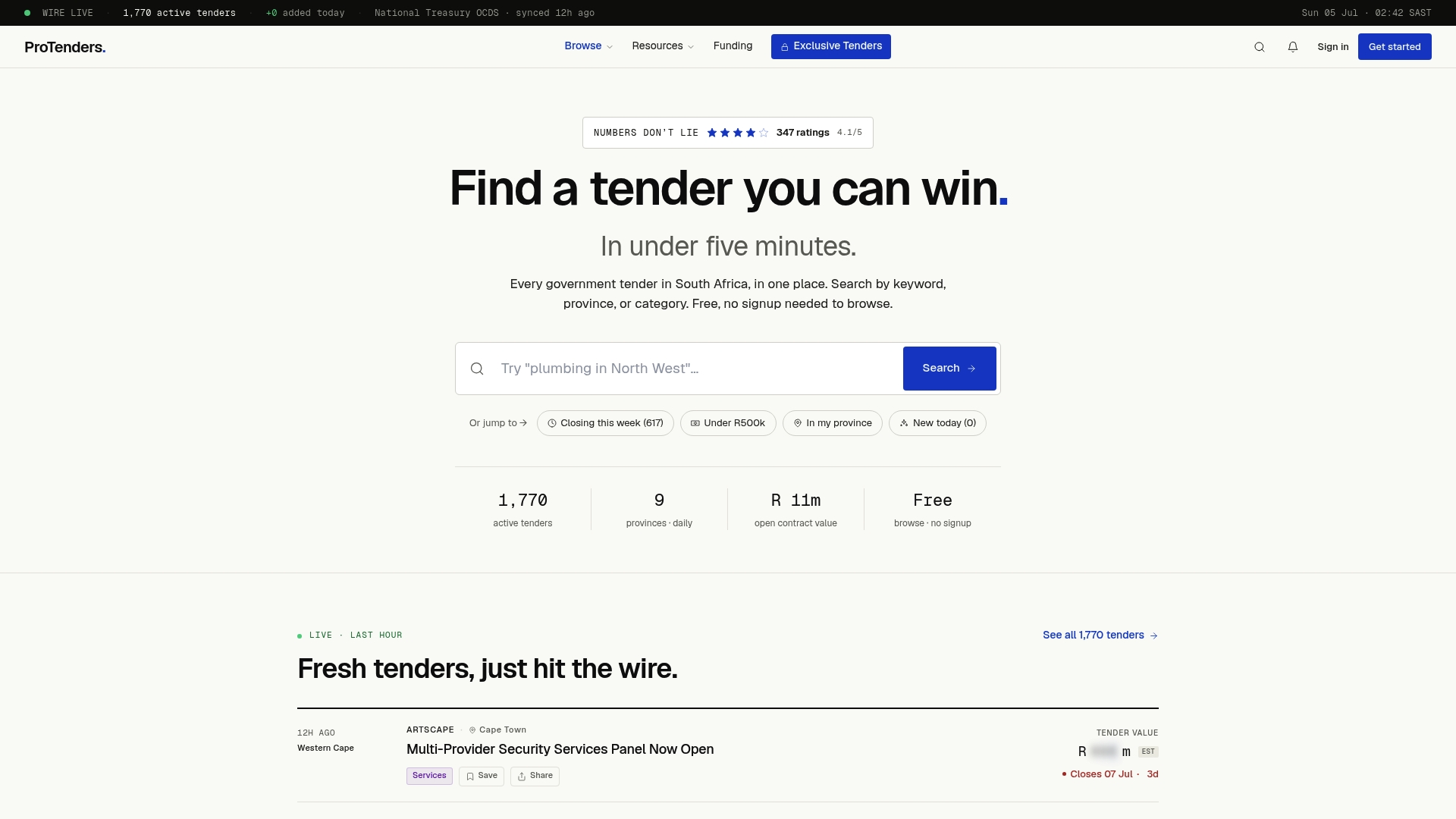
What sets Protenders apart from a basic tender portal is the end-to-end support it provides once you find an opportunity. Compliance scorecards show you exactly where your business stands before you bid. Document templates reduce the time it takes to prepare a submission. Funding partnerships address the cash flow gap that stops many SMMEs from executing awarded contracts. For businesses that have struggled with the complexity of writing a winning tender proposal, Protenders provides the structure and tools to compete on equal footing with larger, more experienced bidders. Search live government tenders now at Protenders and see what opportunities are open in your category today.
FAQ
What is an electronic tender?
An electronic tender is a formal procurement bid submitted through a secure online platform rather than in paper form. The process covers solicitation, submission, evaluation, and contract award entirely within a digital system, with encrypted bids and logged audit trails.
What skills do you need for e-tendering?
Proficiency in digital procurement platforms, knowledge of e-signature and encryption requirements, and the ability to manage compliance through audit trails are the core skills. Document management and data analysis capabilities are increasingly important as AI tools become standard on major platforms.
What are the two main types of tendering?
Open tendering invites any qualified supplier to bid, while selective tendering restricts invitations to prequalified vendors. Both types are supported by electronic tendering platforms, with the choice depending on contract complexity and how much supplier screening the buyer wants to do upfront.
What are the five types of e-procurement?
E-procurement typically covers e-informing (sharing procurement information), e-sourcing (identifying and qualifying suppliers), e-tendering (soliciting and evaluating bids), e-ordering (placing purchase orders), and e-payment (processing invoices and payments). E-tendering sits in the middle of that chain and feeds directly into ordering and payment workflows.
How does Protenders help with government e-tendering?
Protenders aggregates live government tenders from national, provincial, and municipal buyers in South Africa, allowing businesses to search by keyword, region, or category without signing up. Paid features include automated tender alerts, compliance scorecards, and document templates that support the full bid preparation process.
Key takeaways
Electronic tendering replaces paper-based procurement with a fully digital workflow covering solicitation, submission, evaluation, and contract award, delivering measurable gains in speed, transparency, and audit readiness.
| Point | Details |
|---|---|
| End-to-end digital process | Electronic tendering covers every stage from RFP publication to contract signing within a single secure platform. |
| Compliance and audit trails | Every action is logged with timestamps and user identity, directly supporting regulatory and legal accountability requirements. |
| AI is reshaping bid strategy | Platforms now use AI to verify eligibility, flag risks, and analyze historical bid data for pricing guidance before submission. |
| Implementation failures are human, not technical | Rigid internal workflows and poor document standardization cause most e-tendering rollout failures, not the platform itself. |
| Protenders for South African opportunities | Protenders aggregates all live government tenders and provides compliance scorecards, templates, and funding tools for SMMEs. |
Recommended
- How to Write a Winning Tender Proposal: Complete Guide 2026 | ProTenders
- Understanding the eTenders Portal: A Complete Guide for South African Businesses | ProTenders
- How to Submit on eTenders.gov.za, 7-Step Walkthrough (2026) | ProTenders
- Tender Documents South Africa: Checklist & Guide (2026) | ProTenders