One Page Tender Support Letters for South African Bidders, Annex NN

A letter of support for a tender is a concise third-party endorsement that confirms specific commitments and materially strengthens your bid. You likely need one of two types: a partner endorsement from someone with direct knowledge of your capacity, or a financial support letter from a lender confirming funding. Either way, work from a structured template rather than a blank page.
*TL;DR:>
- Support letters from credible, project-related signatories such as partners or lenders with reviewed commitments are more likely to influence evaluators positively.*
- Signatories should provide specific, measurable commitments, include clear timelines, and avoid vague language to ensure their support is substantive and actionable.
- Financial support letters must demonstrate review of the financial model, include key milestones like term sheet status, and be dated close to the submission deadline for maximum impact.
- Draft support letters early, set internal deadlines at least two weeks before the actual submission, and ensure proper signing on letterhead with accurate contact details.
- Using structured templates and compliance tools from sources like ProTenders can streamline preparation and improve the scoring potential of the letters.
Table of Contents
- What a letter of support is (and how it differs from a cover letter)
- Who should sign it and why their authority matters
- Building a tender-ready letter: structure and template
- Financial and lender support letters need more evidence
- Requesting and managing letters without last-minute panic
- Sample openings and a one-page checklist
- Why most support letters underperform, and how to fix that
- Get your letters and templates sorted through ProTenders
- Sources
- FAQ
What a letter of support is (and how it differs from a cover letter)
A letter of support is a strategic third-party endorsement focused specifically on your project. It's not about your company generally, it's about whether this named signatory backs this bid, with this commitment attached. Evaluators read it as social proof: does someone with skin in the game vouch for delivery?
That's different from a tender cover letter, which you write yourself to introduce your submission, or a letter of intent, which signals a party's future willingness to contract without firm commitments yet. A tender cover letter is first-person and administrative. A letter of support is third-party and evidentiary.
Some tenders make it mandatory (particularly for consortium bids or projects requiring proven funding). Others treat it as supporting evidence that lifts your technical score. Check the tender data pack before assuming which applies to you.
Who should sign it and why their authority matters
The signatory matters more than the wording. Evaluators weigh a letter based on how directly the signer knows your work, not how polished the sentences are. The most persuasive letters come from people with hands-on knowledge of the project itself, and that first-hand credibility is what actually moves the scoring needle.
Strong choices include:
- A subcontracting partner who has worked with you before and can speak to specific delivery
- A community leader or beneficiary organization who understands the local impact of the project
- A lender or financial institution confirming a reviewed funding commitment
- A relevant official body (an industry association, a regulator) confirming standing or accreditation
Weak choices: a generic character reference from someone unconnected to the project, or a bank letter that confirms only that you "have an account in good standing." Neither tells an evaluator anything they can score.
Building a tender-ready letter: structure and template
Keep it concise and limited to a single page. Evaluators skim dozens of these, and a letter that rambles past a page signals padding, not substance. The tone should be project-focused and evidence-backed, meaning every sentence should tie back to a specific commitment, not a general compliment.
Use this structure:
- Signatory identity. Name, title, organization, and how it relates to the tender.
- The relationship. How long you've worked together, or how the signatory knows the project.
- An explicit statement of support. Name the tender by number or project title. Don't make evaluators guess which bid this letter belongs to.
- Concrete commitments. Hours of labor, a credit facility amount, equipment access, a subcontracted scope, whatever is real and specific.
- Timeframe. When the commitment starts and how long it holds.
- Contact details. A phone number and email the evaluator could actually use to verify.
- Date and signature. On letterhead where possible.
Pro Tip: Draft the letter yourself and send it to the supporter for signature rather than asking them to write from scratch. You control the specificity and the tender reference; they just need to approve and sign.
Avoid vague phrasing like "we fully support this initiative." Replace it with a statement committing to supplying a specific number of skilled labor hours over a defined timeframe at no cost to the bidder.
Financial and lender support letters need more evidence
A lender letter carries more scrutiny than a partner letter, and generic bank language rarely survives evaluation. South Africa's Annex NN lender support template is the clearest example: it requires the lender to confirm they've reviewed the RFP and the financial model, and to state the extent of their commitment rather than a vague expression of goodwill.
For large tenders, evaluators typically expect confirmation that the lender has actually reviewed the deal, not just that a relationship exists. A letter stating "we confirm the applicant banks with us" won't score the same as one confirming term sheet status or credit committee progress.
Build your lender-evidence checklist around:
- Confirmation the financial model was reviewed
- Term sheet status or indicative offer
- Credit committee stage (submitted, approved, pending conditions)
- Any conditions or caveats attached to the commitment
If you're still sourcing capital, a funding match tool or a funding partner like Formosity Funding can help you line up a lender relationship before you need the letter, rather than scrambling once the tender closes.
Requesting and managing letters without last-minute panic
Work backward from the closing date and set an internal deadline at least two weeks earlier than you actually need the letter. Late requests are the single biggest cause of weak letters. Practical guidance on government tender submissions points out that rushed asks tend to produce generic, low-quality letters that evaluators can spot immediately.
To avoid that:
- Send supporters a short brief explaining the tender, the deadline, and what you need them to commit to
- Provide an editable draft rather than asking them to write blind
- Set your internal deadline earlier than the real one, so you have buffer for revisions
- Confirm the letter is dated close to submission, references the correct tender number, and carries working contact details
- Store scanned originals alongside the rest of your bid documents, matched against your tender documents checklist
Sample openings and a one-page checklist
Two openings worth adapting:
- Partner endorsement: "As [Company]'s subcontracting partner on three prior municipal projects, we confirm our commitment to supply [specific scope] for Tender No. [X], effective from [date]."
- Lender endorsement: "We confirm that [Lender] has reviewed the financial model submitted under Tender No. [X] and has approved a credit facility of [amount], subject to [conditions]."
Checklist before filing: one page, correct tender number, dated within weeks of submission, signed on letterhead, contact details included, commitment stated in numbers rather than adjectives. Tailor the wording to the tender's technical requirements, if the scope calls for specialist equipment, name it; if it calls for local labor, quantify it.
Why most support letters underperform, and how to fix that
Most support letters fail for one of two reasons: they were requested too late, or they were written to sound nice instead of sound specific. I've seen bid packs with beautifully worded letters that say nothing an evaluator can score, sitting next to plainly worded letters that name a dollar figure, a date, and a scope, and win.
The fix isn't complicated. Draft the letter before you ask, name the tender number, and make the supporter's commitment measurable. Compliance scorecards and structured templates exist precisely because evaluators get frustrated re-reading vague submissions; a document that maps cleanly to the required fields generates fewer queries and fewer disqualifications. That's the whole game with support letters: specificity beats sentiment every time.
— Dolene April
Get your letters and templates sorted through ProTenders
Protenders is the practical shortcut for bidders who don't want to build a letter of support from scratch under deadline pressure. You get editable templates for both partner and lender letters, a compliance scorecard that flags missing fields before an evaluator ever sees them, and a funding match tool that connects you to lenders capable of issuing an Annex NN-style commitment.
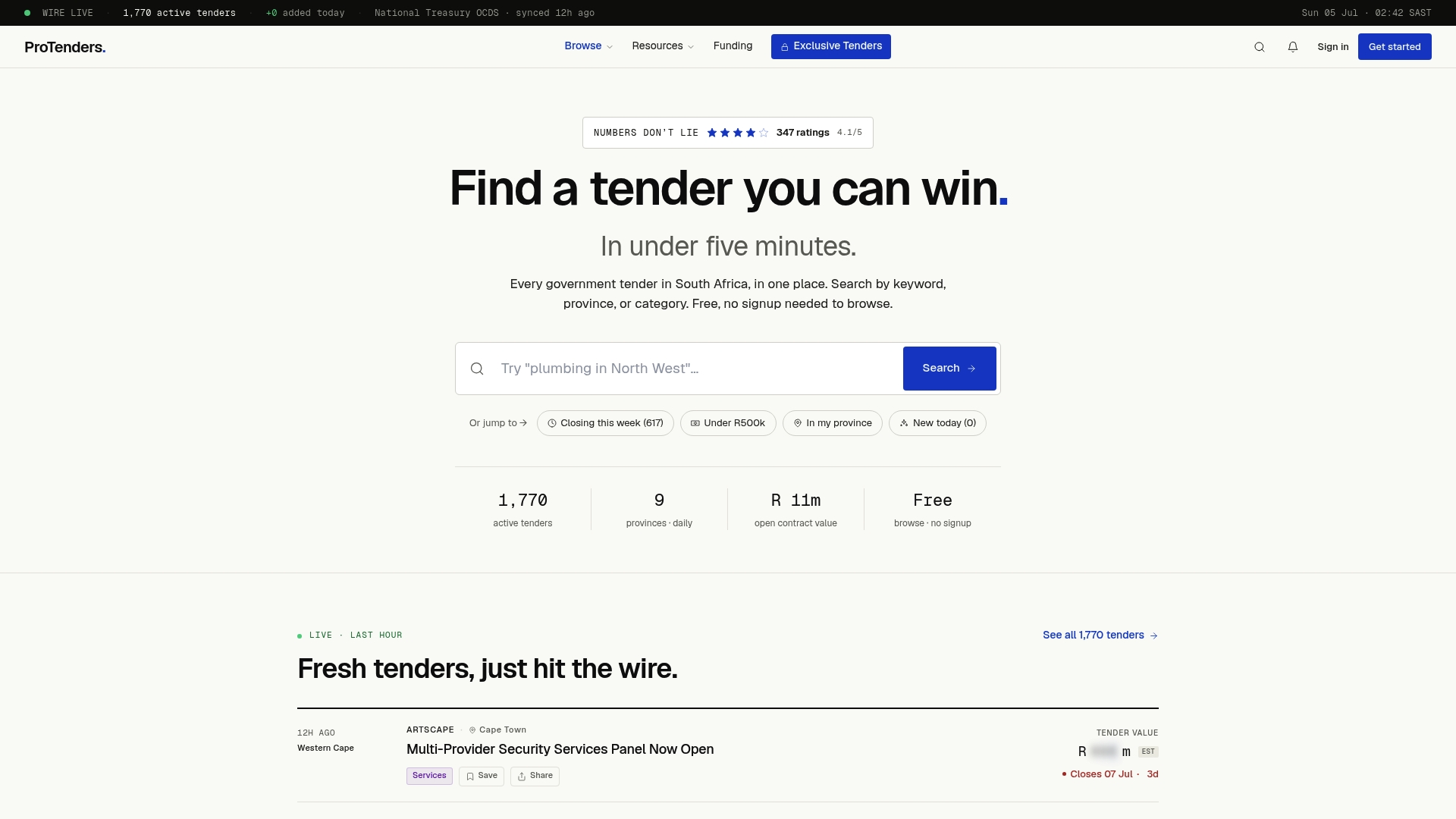
Start by browsing live South African government tenders to confirm exactly what a specific tender's data pack requires, then pull the matching template before you reach out to a single supporter. If funding is the gap holding up your lender letter, run your project through the funding match tool now rather than after the closing date arrives.
Sources
For the official lender format, use the Annex NN letter of support template directly from eTenders, and always cross-check the tender data pack for the specific attachments an employer requires. For structural guidance on writing the letter itself, see OpenGrants' guide to letters of support, and for the broader bid document set, ProTenders' tender proposal format guide covers where these letters slot into the full submission.
- Annex NN – Letter of Support Template from Lender
- From overwhelmed to organised: How to tackle government tender submissions - Strategic Grants
- What is a letter of support: A clear guide with examples - OpenGrants
FAQ
How do I write a letter of support for a tender?
State the signatory's identity and relationship to the project, name the tender number explicitly, give a concrete measurable commitment, and close with a date, signature, and working contact details, all within one page.
What's the difference between a letter of support and a letter of tender?
A letter of tender is the bidder's own submission of an offer to the employer, while a letter of support is a third-party document endorsing that bid from someone outside the bidding company.
Where do I get an official lender support letter template?
Use Annex NN from eTenders for the standard South African format, or pull an editable draft from ProTenders' tender document resources.
How old can a letter of support be when I submit it?
Tender requirements generally expect letters dated close to submission, ideally within a few weeks of the closing date, since outdated or generic letters risk rejection during compliance checks.
Is a letter of support legally binding?
The commitments stated in the letter are what the signatory is accountable for, so vague language limits enforceability, while specific, dated commitments carry real weight if the bid is awarded.